ECL 566: Legends of Troy in Medieval Literature
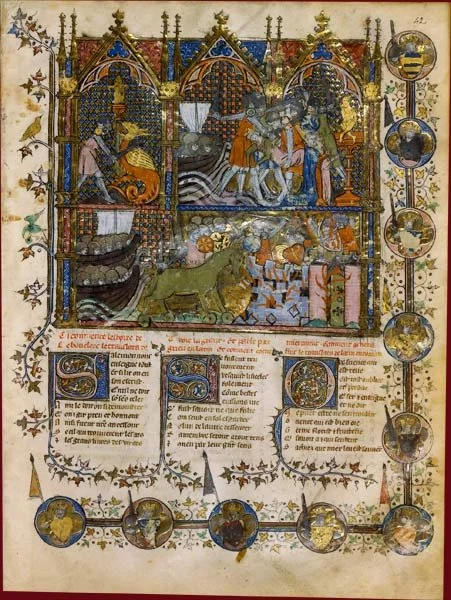
In the Middle Ages many European cultures and regimes imagined the destruction of Troy and the subsequent diaspora of the Trojan people to be foundational to their own origins and legitimacy. For example, in the early 12th century Geoffrey of Monmouth suggests in his History of the Kings of Britain that Brutus of Troy founded Britain and that King Arthur is descended from the royal lineage of the Trojans. While Homer’s Iliad was little known in medieval Europe (except through the abbreviated story in the Ilias Latina), there were many popular texts circulating that purported to be eyewitness accounts of the Trojan War. These texts were translated into multiple European languages and inspired new pseudo-historical works, romances, and poetry all reimagining the tragic destruction of Troy. In this class we will read excerpts from some of the major classical sources on the Trojan War and its aftermath (including Virgil’s Aeneid) that were known in medieval Europe as well as texts by Chaucer, Lydgate, Benoît de Sainte-Maure, and other anonymous writers. Through these readings students will examine how medieval European writers used the myths of Troy to explore their own constructions of history, politics and conflict, morality and spirituality, gender and sexuality, and more.